[전문 & mp3] / [받아쓰기]
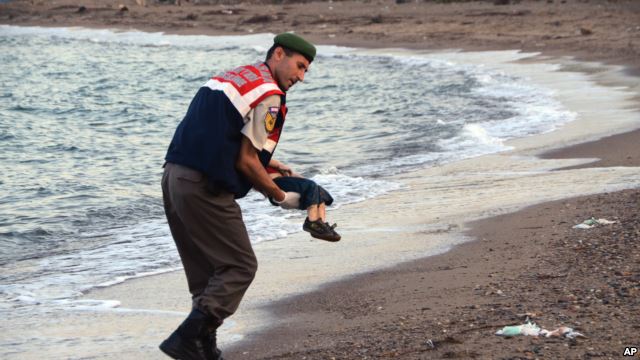
Young and old, they walk along the highway, weary and struggling. Others lay down on the train tracks in Hungary. A small lifeless body of a boy washes up at a beach resort in Turkey. Seventy-one bodies found abandoned in a truck by the side of the road in Austria. They were all fleeing their war-torn countries, hoping to find a better, safer life in Europe, maybe in Germany or Austria. Many traveled in small boats to reach European shores. Now, the European Union continues to struggle over how to handle the wave of people moving toward their borders. Joost Hiltermann is with the International Crisis Group, in Brussels, Belgium.“Clearly, the European Union is in a total panic. And, partly because of refugees landing on its shores, which it prefers to call ‘migrants.’ And, secondly, because the European Union is internally, terribly, terribly divided, with some countries taking certain steps, and others trying other steps. So, there is no coordination, and therefore, no effective response to the crisis.”
* weary = 지친, 피곤한/ lifeless = 죽은, 죽은 듯한/ wash up = 물에 떠 밀려 오다/ abandon = 유기하다, 버리다/ flee = 달아나다, 도망하다/ war-torn = 전쟁으로 피폐해진/ in a panic = 공황에 빠진/ refugee = 난민, 망명자/ migrant = 이주자/ take steps = 조치를 취하다
On Friday, the United Nations High Commissioner for Refugees, the UNHCR, called on the European Union to admit up to 200,000 refugees. Commissioner Antonio Guterres asked the European Union, the EU, to start a “mass relocation program” to help the flood of migrants looking for shelter in Europe. He said a divided EU only helps smugglers and traffickers. Some of these people seeking shelter are called “migrants.” Some are called “refugees.” These words are used over and over in news stories about people fleeing their countries. They are seeking a better, safer life in Europe. Are they “migrants,” or “refugees”? Does it matter? The UNHCR, says yes, it matters.
* admit = 받아들이다/ relocation = 재배치, 이전/ flood of ~ = ~의 범람, 쇄도/ shelter = 피신처[대피처]; 주거지/ smuggler = 밀수범/ trafficker = 불법 거래 상인