
Global Breaking News - Tuesday, October 6, 2026








   |
[Headlines] (HL-사건/사고/법률) US Has a Long History of Restricting Immigrants
최고관리자 | 17-01-31 21:38
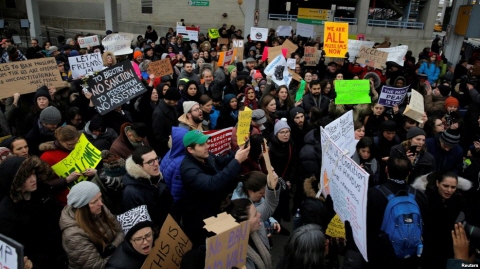
Last Friday, President Donald Trump signed an executive order banning refugees and people from seven Muslim-majority countries from entering the United States. The countries are Iran, Iraq, Libya, Somalia, Sudan, Syria and Yemen. Protesters across the U.S. immediately objected to the restrictions. Some argue that Trump’s order discriminates against Muslims and defies the American tradition of welcoming immigrants. Many of these protesters correctly point out that the U.S. is a country of immigrants. However, history shows that the U.S. is also a country of restrictions on immigrants. Trump’s government is not the first administration to restrict immigration, including on the basis of national origin.
* executive order = 행정 명령[미국 대통령 명령]/ ban = (~에게) ~을 금(지)하다/ refugee = 난민, 망명자/ object to ~ = ~에 반대하다/ restriction = (법률・규칙을 통한) 제한[규제]/ discriminate against ~ = ~을 냉대[차별 대우]하다/ defy = (권위・법률・규칙 등에) 반항[저항/거역]하다/ point out = 가리키다, 지적하다; 주목하다/ on the basis of ~ = ~에 근거하여, ~을 기반으로/ origin = (사람의) 출신[혈통/태생]
The U.S. Constitution, which went into effect in 1789, gave Congress “absolute authority” over immigration law, says Linda Monk. The president executes those laws through regulations. Monk wrote a book about the Constitution called “The Words We Live By.” She explains that for about the first 100 years of American history, Congress did not place any federal limits on immigration. During those years, Irish and German immigrants came to the U.S. in large numbers. Many Chinese immigrants did, too. They hoped to find gold in California and then, when they did not, they stayed anyway. But some members of the American public disapproved of these groups. They did not like the Catholic religion that many Irish and Germans immigrants practiced. And they did not like Asian immigrants, whom they viewed as convicts, prostitutes, or competition for jobs.
* go into effect = 효력이 발생되다, 발효하다, 실시되다/ absolute authority = 절대적인 권한[권위]/ place a limit on ~ = ~에 제한[한계]을 두다/ disapprove of ~ = 탐탁찮아[못마땅해] 하다; ~에 반대하다/ view as ~ = ~으로 간주하다/ convict = 기결수, 재소자/ prostitute = 매춘부, 창녀
|
|