[전문 + mp3] / [받아쓰기]
Solar cells have been around since the 1950s. But now there is a race to develop transparent solar cell that can cover windows of buildings and still capture the sun’s light for electricity. There are three kinds of light that reach our planet from the sun. They are ultraviolet light, or UV, visible light, and infrared light. Together they make up what is called the solar spectrum. Troy Townsend is a solar cell researcher at St. Mary’s College of Maryland. He says working with the transparent solar technology for windows means you cut the efficiency in half. That is because you are letting visible light—light you can see—pass through the solar cells instead of capturing and using that light to make electricity. That leaves only light from the ultraviolet and infrared parts of the light spectrum to make electricity. He spoke to VOA via Skype. “One of the major challenges with transparent solar cells is developing a system that would allow you to absorb the maximum amount of UV and the maximum amount of infrared.” Because glass absorbs UV light, Townsend says the efficiency will drop even more, if the solar cell is on the inside of the window. But if the cell is put on the outside of the window, it could capture the light before it goes through the glass. That would require the cell to be protected from the elements of heat, moisture, and cold. Townsend says the trick would be to find a clear material that would cover the cell—and still let the light come through.
* solar cell = 태양광 전지/ race to ~ = ~하려는 경쟁/ transparent = [유리・플라스틱 등이] 투명한/ capture = 잡다/ electricity = 전기, 전력/ ultraviolet light(UV) = 자외선, 자외방사/ visible light = 가시 광선(可視光線)/ infrared light = 적외선(赤外線)/ make ~ up = ~을 이루하[형성하다]/ what is called = 소위, 이른바/ solar spectrum = 태양 스펙트럼/ cut ~ in half = ~을 반으로 자르다/ efficiency = 효율(성), 능률/ the elements(pl) = 악천후, 비바람
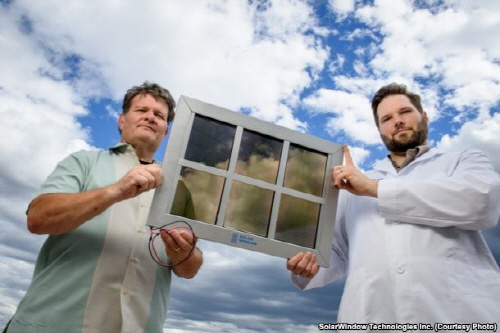
Several colleges and private laboratories are working to develop photovoltaic compounds that could be applied to windows. They would be transparent, which means, you can see through them. So they would be able to collect the sun’s energy without blocking the view through the window. SolarWindows Technologies in Maryland says it has developed an efficient transparent solar cell. John Conklin is head of the company. “We have actually taken a technology, organic photovoltaics, and innovated it into transparent technology, applied it to window glass and turned a passive window into an active electricity generating window.” Conklin says a solar window can be totally transparent. Or it could be tinted, or colored, which makes it more efficient. "We can make the color darker or lighter, or blend the colors to go with the blue-green, a green-grey, a brown, depending on what the architect, the building owner or the building developers is looking at.” Conklin says his company is working with the U.S. Department of Energy to test and develop the technology. And he plans to have a commercial-ready product by the end of 2017. If he is successful, Conklin says his electricity-making window could pay for itself in one year. According to a 2012 survey, there are 5.6 million commercial buildings in the U.S. They have more than 8 billion square meters of windows. Even if only a part of that glass could collect power from the sun, it could greatly lower the need for polluting fossil fuels.
* photovoltaic = 광전지의, 광발전의/ compound = 화합물; 복합체/ organic photovoltaics = 유기적 광전 변환 공학/ passive = 수동적, 소극적인/ turn ~ into ~ = ~을 (~에서) ~이 되게 하다[~으로 바꿔 놓다]/ tint = (약간의)색깔을 넣다[색조를 더하다]/ architect = 건축가/ commercial-ready = 상업적으로 준비된[완성된, 이용이 가능한]/ fossil fuel = 화석 연료